ABOUT-PARIS.COM

​pantheon

  • Home
  • PARIS HOTELS
  • Paris airports
  • Paris train stations
  • Getting to Paris
  • Getting around Paris
  • neighborhoods
  • Disneyland Paris
  • Attractions
  • Paris blogs
Picture
 Image: Jean Neymar
 Place du Pantheon
75005 PARIS
Located in 5th arrondissemont
Your metro station is:
Cardinal  Lemoine
10 minutes
Picture
Your metro station is:
 Place Monge
12 minutes

Picture
Picture
Picture
Luxembourg
7 minutes

Rue Soufflot & the Panthéon: A Walk Through France’s Soul

In the heart of Paris’s historic Latin Quarter, there’s a short stretch of street that feels like a direct line into the French soul. Rue Soufflot, a graceful avenue lined with cafés and bookshops, leads the eye—and the feet—straight to the imposing dome of the Panthéon, one of the city’s most storied monuments. But this isn’t just another pretty Parisian view. This is a place where history, architecture, and national identity converge.
it’s a journey through layers of French identity. It reminds us that Paris isn’t merely a city of beauty, but of ideas, of revolutions, philosophers, and poets. It’s where the past is always present, and where the quiet hum of daily life meets the deep echo of history.
Picture
Picture
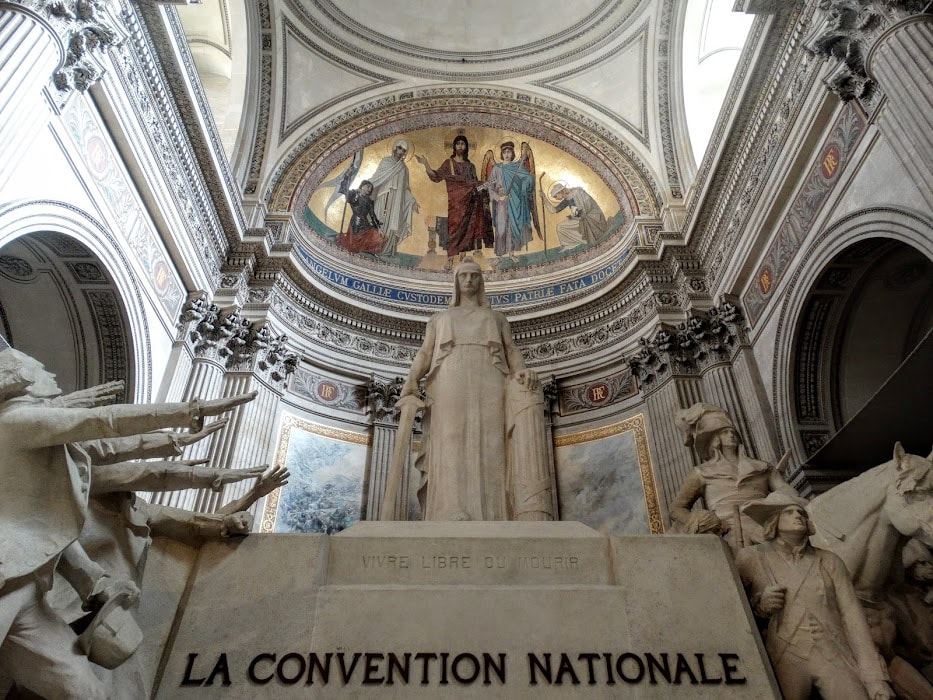
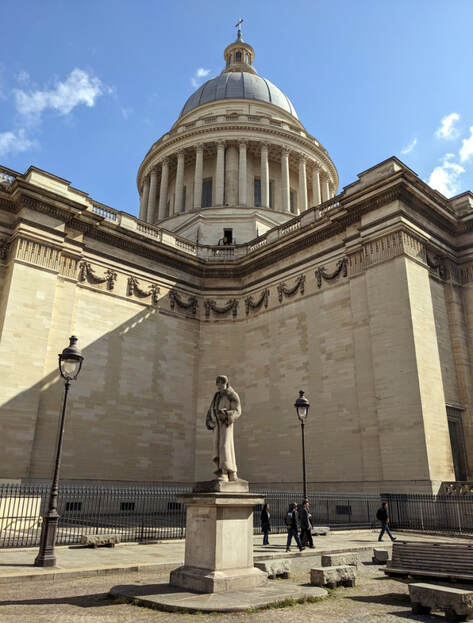
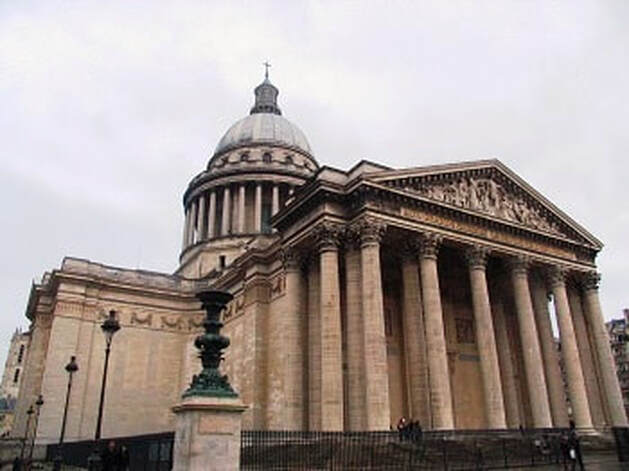
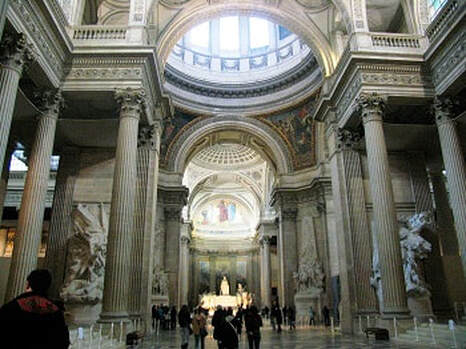
The Pantheon is a neoclassical monument in the Latin Quarter of Paris on the Left Bank of the Seine River, another monument that is synonymous with the city. Originally built as a church dedicated to St.Genevieve this ornate monument is now dedicated to the memory of the men and women who have influenced French history since the Revolution. 
The list includes Voltaire, Victor Hugo, Jean-Jacques Rousseau, Emile Zola, Louis Braille, Marie Curie, Alexandre Dumas and the original architect Soufflot who actually died before its completion in 1791. You will most of their tombs in the cavernous crypt underneath the building.
Over the years the Pantheon changed back and forth to being utilised as a church but eventually assumed its lasting role as burial place for martyrs and inspirational French citizens.
Picture
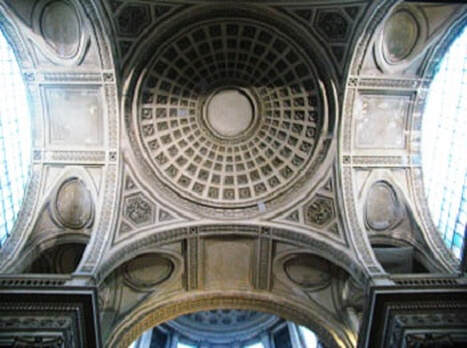
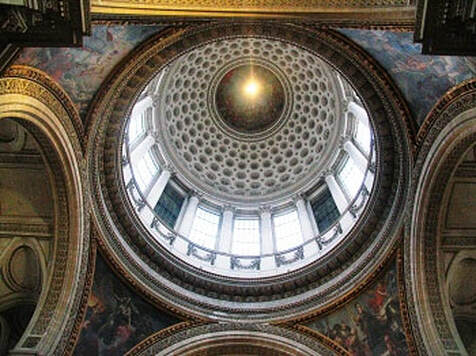
As soon as you enter the building you can't help but be in awe of what awaits you - it never ceases to amaze us as to the skills of the artisans who built these monuments
Picture
Picture
Picture
 Some key details about the Panthéon:
  1. History and Architecture:
    • The Panthéon was originally commissioned by King Louis XV in 1756 as a church dedicated to Saint Genevieve, the patron saint of Paris.
    • Designed by the architect Jacques-Germain Soufflot, the building exemplifies neoclassical architecture, with its grand dome, Corinthian columns, and a façade inspired by the Pantheon in Rome.
    • Construction began in 1758 but was interrupted by financial difficulties and political changes. It was eventually completed in 1790, during the French Revolution.
  2. Evolution During the French Revolution:
    • In 1791, the French Revolution transformed the Panthéon into a secular mausoleum to honor the great men of France.
    • The inscription on the front of the Panthéon reads "Aux grands hommes la patrie reconnaissante" (To great men, the grateful homeland).
  3. Mausoleum and Burial Place:
    • The Panthéon houses the remains of notable French citizens, including writers, scientists, philosophers, and political figures.
    • Some of the prominent figures buried in the Panthéon include Voltaire, Jean-Jacques Rousseau, Victor Hugo, Emile Zola, Marie Curie, and Louis Braille.
  4. Foucault Pendulum:
    • In 1851, physicist Léon Foucault installed his famous pendulum in the Panthéon, demonstrating the Earth's rotation. The original pendulum is now displayed in the Musée des Arts et Métiers, but a replica remains in the Panthéon.
  5. Art and Decor:
    • The interior of the Panthéon features impressive artwork and sculptures, including frescoes depicting scenes from French history.
    • The dome offers a stunning view of Paris and the surrounding areas.
  6. Visitors and Events:
    • The Panthéon is open to the public, and visitors can explore its historic chambers, crypt, and exhibitions.
    • It also serves as a venue for events, ceremonies, and temporary exhibitions.
  7. Restorations and Preservation:
    • The Panthéon has undergone several renovations and restorations over the years to preserve its architectural integrity and historical significance.
    • It continues to be a symbol of French cultural heritage and remains an important landmark in the heart of Paris.
The Panthéon stands as a testament to the evolution of French history, culture, and the enduring contributions of influential individuals. Its grand architecture, role as a mausoleum, and cultural significance make it a compelling destination for both locals and tourists exploring the vibrant city of Paris. You can visit the colonnade of the Panthéon’s dome which offers 360° views of Paris for those willing to climb the 206 steps to get there!
TAKE ON THE TOWER
Picture
 Did you know you can catch a view of the Eiffel tower from between the pillars of the Pantheon. You could walk to it from here in just over an hour (4.5km). Though you may want to stop and spend some time in the stunning Luxembourg Gardens on the way! ​
Tips for Visiting
Best time to go: Early morning or late afternoon, when the light is soft and the street less crowded.
Don’t miss: The Panthéon’s dome, which you can climb for panoramic views over Paris.
Nearby gems: Jardin du Luxembourg, the Sorbonne, and Rue Mouffetard’s market street are all within a few minutes’ walk.
Official website http://www.paris-pantheon.fr/

​◄Back to Paris attractions

Menu:

HOME
​

DISNEYLAND


HOTELS

AIRPORTS

TRAIN STATIONS

NEIGHBOURHOODS 


ATTRACTIONS

​​BLOG

THINGS TO KNOW BEFORE YOU GO


​

Support

Contact : admin(at)about-paris.com
FAQ
Privacy policy
Cookie policy
  ​
© COPYRIGHT 2015- 2023
ALL RIGHTS RESERVED.

​

  • Home
  • PARIS HOTELS
  • Paris airports
  • Paris train stations
  • Getting to Paris
  • Getting around Paris
  • neighborhoods
  • Disneyland Paris
  • Attractions
  • Paris blogs